Nutrition and Dental Health in Early Childhood
How everyday eating patterns shape young children's teeth: meal and snack timing, tooth-friendly foods, drinks, pouches, picky eating and practical menus.
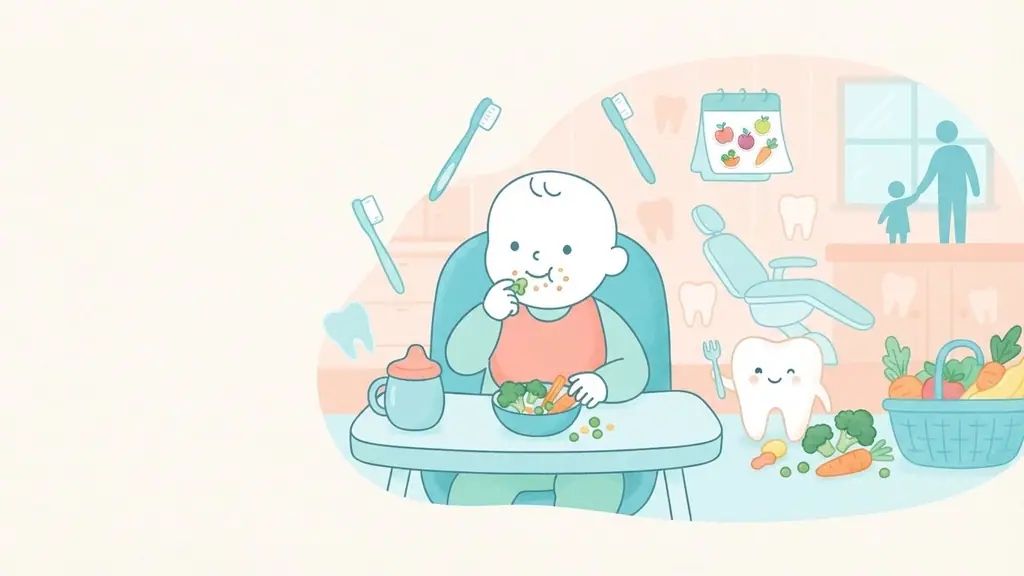
What your child eats affects their teeth in two ways. In the short term, foods and drinks change the conditions in the mouth many times a day: sugars feed plaque bacteria, while chewing and saliva help teeth recover. In the long term, a balanced diet supports healthy gums and the development of the adult teeth already forming under the gums.
You don't need a special "dental diet". The habits that protect teeth (regular meals, planned snacks, water as the main drink, few added sugars) are the same ones pediatricians recommend for overall health. This guide shows how they fit together in real family life.
Pattern matters as much as food
The American Academy of Pediatric Dentistry (AAPD) highlights that the frequency of eating and drinking, and how long foods stay in the mouth, influence decay risk as much as the foods themselves.
A child who eats three meals and two planned snacks gives their teeth recovery time in between. A child who grazes all day, or sips milk or juice from a cup they carry around, gives teeth very little rest. See how tooth decay forms in children for the details of that acid-and-repair cycle.
A simple rhythm for toddlers and preschoolers: breakfast, mid-morning snack, lunch, afternoon snack, dinner. Water in between. Kitchen "closed" outside those times, except for water.
Tooth-friendly foods
These are good everyday choices that also support general nutrition:
- Vegetables, raw (age-appropriately cut to avoid choking) or cooked. Crunchy ones encourage chewing and saliva.
- Whole fruit rather than juice: the fiber and chewing make a difference.
- Cheese and plain yogurt. Dairy provides calcium and phosphate; cheese eaten at the end of a meal may help neutralize acid.
- Eggs, beans, lentils, fish, poultry and meat for protein and minerals.
- Wholegrain bread, rice, pasta, oats as the base of meals.
- Nuts and seeds as nut butters or ground (whole nuts are a choking hazard for under-fives).
Nutrients that support teeth and gums
| Nutrient | Why it matters | Common sources |
|---|---|---|
| Calcium and phosphate | Building blocks of enamel and bone | Milk, cheese, yogurt, fortified plant drinks, tinned fish with bones |
| Vitamin D | Helps the body use calcium | Sunlight, oily fish, eggs, fortified foods; supplements where advised |
| Vitamin C | Healthy gums | Citrus, berries, peppers, broccoli |
| Fluoride | Strengthens enamel | Fluoride toothpaste, fluoridated tap water |
Vitamin D advice varies by country. In the UK, for example, the NHS recommends daily vitamin D supplements for babies and young children in most cases; in the US, pediatricians advise on supplements for breastfed babies. Ask your health visitor or pediatrician what applies to your child.
Foods and habits to keep for mealtimes
Some foods are perfectly fine as part of a meal but harder on teeth when eaten alone or often:
- Sweet foods of any kind: cakes, biscuits (cookies), sweets, chocolate.
- Dried fruit, which is sticky and concentrated.
- Fruit pouches: squeezing the purée straight into the mouth is quick and often slow-sipped. Spooning it into a bowl, or offering whole fruit, is kinder to teeth.
- Crackers and crisps (chips), which turn into a sticky paste that clings to the grooves of molars.
- Acidic foods and drinks such as citrus juice or fizzy drinks, which can erode enamel.
For a closer look at sugars and labels, see sugar and your child's teeth.
Drinks: keep it simple
The American Academy of Pediatrics (AAP) and other US health groups agree that water and plain milk are the best drinks for young children.
| Age | Main drinks | Notes |
|---|---|---|
| 0 to 6 months | Breast milk or infant formula | No juice. Water generally not needed (follow local advice in hot weather) |
| 6 to 12 months | Breast milk or formula, plus small amounts of water from a cup | AAP suggests about 4 to 8 oz (120 to 240 ml) of water a day once solids start |
| 12 months to 5 years | Water and plain milk | Juice is not necessary; if offered, keep it small and with meals |
Toddler or "growing-up" milks, flavored milks and juice drinks are not needed and often contain added sugars. More on this in water: the best drink for young teeth, and on bottle habits in baby bottle tooth decay.
Picky eaters and sensory preferences
Many toddlers go through phases of eating a narrow range of foods. Try not to fill gaps with sweet snacks or milk between meals, as this can reduce appetite at mealtimes and increases sugar exposures.
- Keep offering a small portion of new foods alongside familiar ones.
- Eat together when you can; children learn by watching.
- Avoid using sweets as a reward for eating vegetables.
- If your child has strong sensory preferences or a very limited diet, ask your pediatrician for support; a dietitian or feeding specialist can help.
Sample tooth-friendly day for a toddler
- Breakfast: porridge (oatmeal) with mashed banana, milk.
- Snack: cheese cubes and cucumber sticks, water.
- Lunch: lentil and vegetable stew with rice, yogurt with berries, water.
- Snack: wholegrain toast fingers with mashed avocado, water.
- Dinner: fish, potatoes and broccoli, a small slice of cake if it's a celebration, water.
- Before bed: brush with fluoride toothpaste, then nothing but water.
This is just an illustration; portion sizes and foods depend on your child's age, needs and family culture.
Protect teeth alongside a good diet
Nutrition works best together with:
- Brushing twice a day with fluoride toothpaste (a smear under three, a pea-sized amount from three to six), last thing at night.
- Nothing but water after bedtime brushing.
- Regular dental visits, starting by the first birthday.
Our oral hygiene by age tool summarizes routines at each stage.
When to see a professional
- Your child has frequent snacks or drinks for medical reasons (such as a condition requiring frequent feeding): ask your dentist about extra prevention.
- You notice white or brown spots, or your child has pain when eating.
- Your child's diet is very limited, or you're worried about growth or nutrition: talk to your pediatrician or health visitor.
Quick recap
Regular meals and planned snacks, plenty of vegetables and whole fruit, water and plain milk as the main drinks, sweet foods kept to mealtimes, and fluoride toothpaste twice a day: that is the whole formula. Explore more on our nutrition topic page.
Sources and further reading
- Policy on Nutrition and Dietary Counseling in the Pediatric Dental Setting, American Academy of Pediatric Dentistry
- Recommended Drinks for Young Children Ages 0-5, American Academy of Pediatrics (HealthyChildren.org)
- Guideline: Sugars intake for adults and children, World Health Organization
- Drinks and cups for babies and young children, NHS