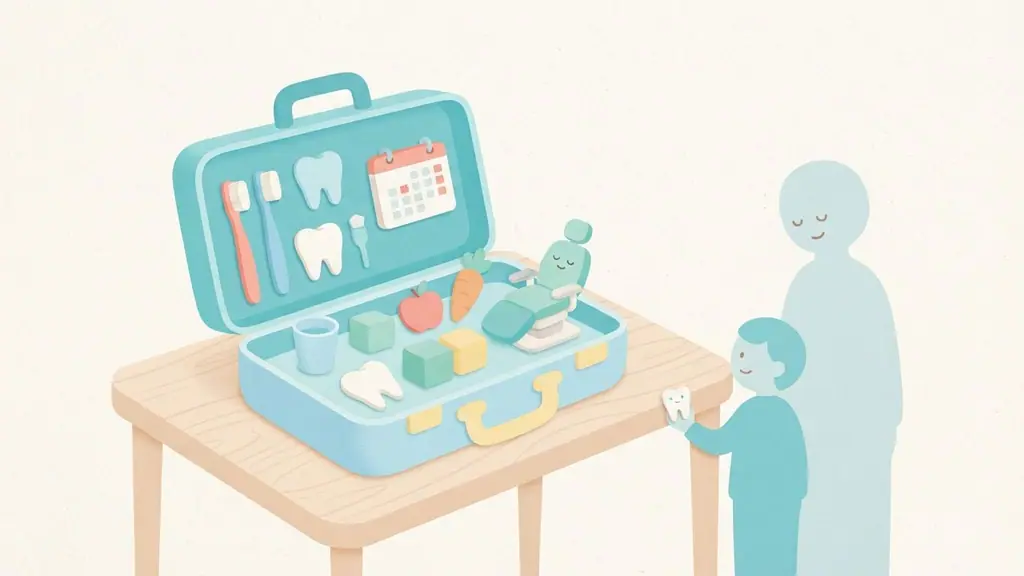
Dental Anxiety in Children: How to Help
Why young children fear the dentist, what to say before a visit, how dental teams help nervous kids, and when extra support or sedation might be discussed.

Feeling nervous about the dentist is very common in childhood, and completely understandable. A dental visit involves a stranger, bright lights, unfamiliar sounds and someone looking closely into your mouth while you lie back. For a toddler or preschooler, that's a lot.
The encouraging news is that fear of the dentist can often be prevented or eased. Starting visits early, preparing your child with calm and honest language, and choosing a dental team that works well with children make a real difference. This guide gathers practical strategies for before, during and after appointments.
Why children feel anxious
Dental fear usually has several roots:
- The unknown. Young children don't know what will happen, and imagination fills the gaps.
- Sensory overload. Lights, sounds, tastes, smells and the feeling of instruments can be overwhelming, especially for children with sensory sensitivities.
- Loss of control. Lying back with your mouth open feels vulnerable.
- Past experiences. A painful visit, an emergency treatment, or a medical procedure elsewhere can leave a lasting memory.
- What they hear from adults and siblings. Children pick up on adults' worries and stories very quickly.
Starting dental visits by the first birthday, as the AAPD, ADA and AAP recommend, means your child's first experiences are usually simple checkups rather than treatment for a problem. That alone helps prevent fear.
What helps at different ages
| Age | What children typically need | Ideas that often help |
|---|---|---|
| Babies (under 18 months) | Closeness to a parent; familiar routines | Sit them on your lap; bring a comfort item; book around naps |
| Toddlers (18 months to 3 years) | Simple words, short waits, a sense of safety | Play dentist at home; keep explanations to one or two sentences |
| Preschoolers (3 to 5 years) | Knowing what will happen; a little control | Picture books; letting them hold a mirror; a stop signal |
| School-age (6 and up) | Honest information; being treated as a participant | Let them ask the dentist questions; agree a hand signal for breaks |
Before the visit
Choose words carefully
| Instead of… | Try… |
|---|---|
| "It won't hurt." | "The dentist will count your teeth and check they're healthy." |
| "Don't be scared." | "Lots of children feel a bit nervous. I'll be right here." |
| "If you're good, you'll get a treat." | "Afterwards we're going to the park." |
| "They'll give you a shot / drill." | Leave the explaining to the dental team, who use child-friendly words |
| "I hate the dentist too." | Keep your own worries for adult conversations |
Prepare through play
- Play dentist at home: take turns counting teeth with a toothbrush, using a hand mirror and a torch (flashlight).
- Read a picture book about a visit to the dentist.
- Practice "open wide" and lying back on a sofa or bed.
- Brush teeth together so having someone look in the mouth feels normal. Our toothbrushing timer can make it playful.
Plan the practical details
- Book at a time when your child is usually rested and fed.
- Tell the practice in advance if your child is anxious, autistic, has sensory sensitivities or had a difficult experience before. Many teams can offer a quieter time, a short "meet and greet" visit, or extra time.
- Bring a comfort toy, and headphones if sounds bother your child.
- Use our first dental visit checklist to keep things organized.
During the visit
Pediatric dental teams use well-established behavior guidance approaches, described in the American Academy of Pediatric Dentistry's best practices. You may see:
- Tell-show-do: the dentist explains what they'll do in simple words, shows the instrument (for example, letting your child touch the "tooth counter" or feel the air from the "wind blower"), then does it.
- Positive reinforcement: praising specific cooperative behavior ("You opened so wide!").
- Distraction: songs, counting, stories, ceiling pictures or videos.
- Voice control and non-verbal signals: a calm, steady tone and friendly body language.
- A stop signal: older children may be invited to raise a hand if they need a break, which gives them a sense of control.
How you can help:
- Stay calm and quiet and let the dental team lead the conversation; too many voices can be confusing.
- Offer physical comfort if appropriate: holding a hand or foot.
- Follow the team's lead on whether you sit close by or in the room's corner; practices differ.
After the visit
- Praise effort, not perfection. "You were brave to open your mouth even though you felt nervous."
- Do the pleasant thing you planned.
- Talk about it positively in the days afterwards, and look at the picture book again.
- Keep regular visits going. Routine checkups help build familiarity and confidence.
When fear is strong or treatment is needed
Some children remain very anxious despite preparation, or need treatment that's difficult to do while they're awake and alert. The dental team may discuss options such as:
- Breaking treatment into shorter visits.
- Nitrous oxide ("laughing gas"), which helps many children relax while staying awake.
- Sedation or general anesthesia for extensive treatment or when other approaches aren't enough, carried out with appropriate safety measures.
These decisions depend on your child's age, health and needs. Ask the dentist to explain the benefits, risks and alternatives so you can decide together. Preventing decay in the first place, through daily fluoride brushing and limiting sugars, is the best way to avoid difficult treatment altogether; see how tooth decay forms in children.
Children with sensory or developmental differences
Autistic children and those with sensory sensitivities may find dental visits particularly challenging. Visual schedules, social stories, practicing with photos of the practice, allowing sunglasses or headphones, and gradual "desensitization" visits can help. Read more in oral care for autistic children.
When to see a professional
- Your child's fear is so strong that you are avoiding dental visits altogether.
- Your child has pain, swelling or an injury: don't delay care because of anxiety. The team can help with comfort measures.
- Your child's anxiety extends to other health settings or daily life; talk to your pediatrician or family doctor.
- You have strong dental anxiety yourself and find it hard to bring your child; ask the practice for support, or have another trusted adult attend.
Summary
Start early, prepare with play and positive words, tell the practice what your child needs, and let the dental team guide the visit. Praise effort afterwards and keep checkups regular. If fear is severe, there are options, and you can discuss them openly with the dentist. Learn more about your child's first dental visit and other topics on our dental visits topic page.
Sources and further reading
- Behavior Guidance for the Pediatric Dental Patient (Best Practices), American Academy of Pediatric Dentistry
- Periodicity of Examination, Preventive Dental Services, Anticipatory Guidance/Counseling, and Oral Treatment for Infants, Children, and Adolescents, American Academy of Pediatric Dentistry
- Babies and Kids, American Dental Association (MouthHealthy)
- Taking care of children's teeth, NHS