Your Child's First Dental Visit
When to book your child's first dental visit, what happens during it, how to prepare a baby or toddler, and which questions to ask the dental team.
Your child's first dental visit should happen by their first birthday, or within six months of the first tooth appearing, whichever comes first. That's the recommendation of the American Academy of Pediatric Dentistry (AAPD), the American Dental Association (ADA) and the American Academy of Pediatrics (AAP). In the UK, the NHS suggests taking your child when their first milk teeth appear, or before they're 12 months old, and NHS dental care is free for children.
It may seem early, especially when there are only a few teeth to look at. But a first visit is mostly about prevention and guidance: spotting problems before they start, helping you with brushing and feeding questions, and letting your child get used to the dental setting while nothing hurts.
Why go so early?
- Decay can start as soon as teeth appear. Early white spots are often reversible if caught in time.
- You get personalized advice on toothpaste amounts, feeding, dummies (pacifiers), thumb-sucking and teething.
- Your child builds familiarity. A relaxed first experience lays the groundwork for positive visits later.
- It establishes a "dental home", the AAPD's term for an ongoing relationship with one dental practice that knows your child and is there if something goes wrong.
The first visit is often short: around 15 to 30 minutes, much of it a conversation with you. For a baby, it can be one of the easiest appointments you'll have.
What usually happens
Every practice works a little differently, but a first visit often includes:
- A chat about your child's health and habits: medical history, feeding (breast, bottle, cup), drinks and snacks, brushing, fluoride sources, dummy or thumb use.
- A gentle look in the mouth. With babies and young toddlers, this is often a "knee-to-knee" exam: you sit facing the dentist with your child on your lap, then lower your child back so their head rests in the dentist's lap while you hold their hands. Your child stays close to you throughout.
- Checking teeth, gums, tongue and jaw for early decay, how teeth are coming in, and anything unusual.
- A caries risk assessment, which helps decide how often your child should be seen.
- Cleaning, if needed, and often fluoride varnish, painted onto the teeth in seconds.
- Practical guidance for the months ahead: brushing technique, teething, injury prevention, and what to expect next.
It's normal for babies and toddlers to cry. Crying doesn't mean something is hurting, and it actually lets the dentist see inside more easily. Dental teams are very used to it.
How to prepare
For babies (under 18 months)
- Book a time that suits your baby's rhythm, ideally after a nap and not too close to a feed.
- Bring a comfort item, a spare nappy (diaper) and a snack for afterwards.
- Practice lifting the lip and looking at the teeth at home, so a quick look is familiar.
For toddlers and preschoolers
- Talk about it simply and positively: "The dentist will count your teeth and check they're strong."
- Avoid scary words such as "hurt", "needle" or "drill", and avoid promising "it won't hurt"; it introduces the idea that it could.
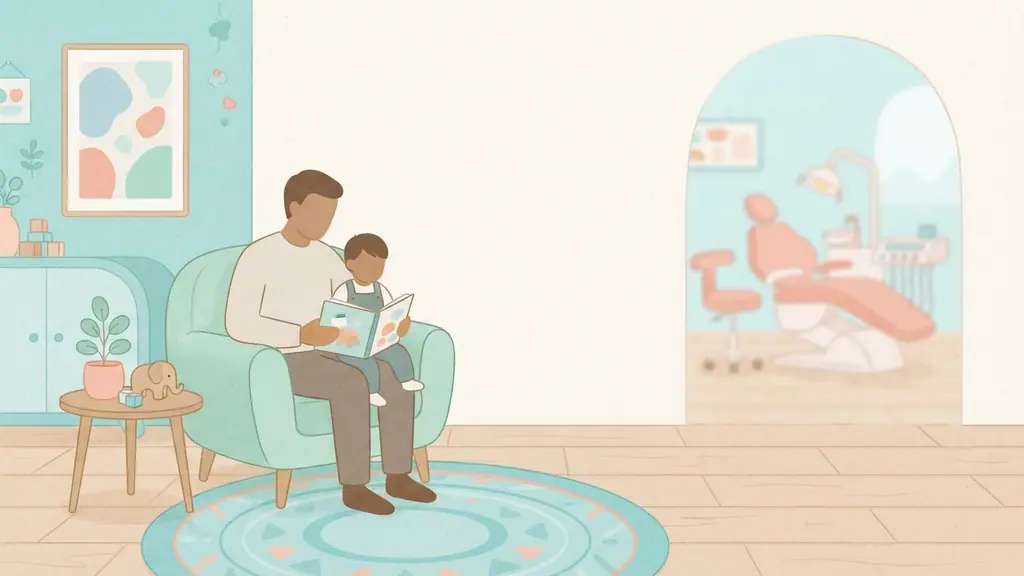
- Read a picture book or play dentist with a toy, taking turns counting teeth with a toothbrush.
- Keep your own feelings in check. If you're anxious about the dentist, try not to show it, or ask another calm adult to come along. More ideas are in dental anxiety in children.
- Plan something pleasant afterwards, like a trip to the park.
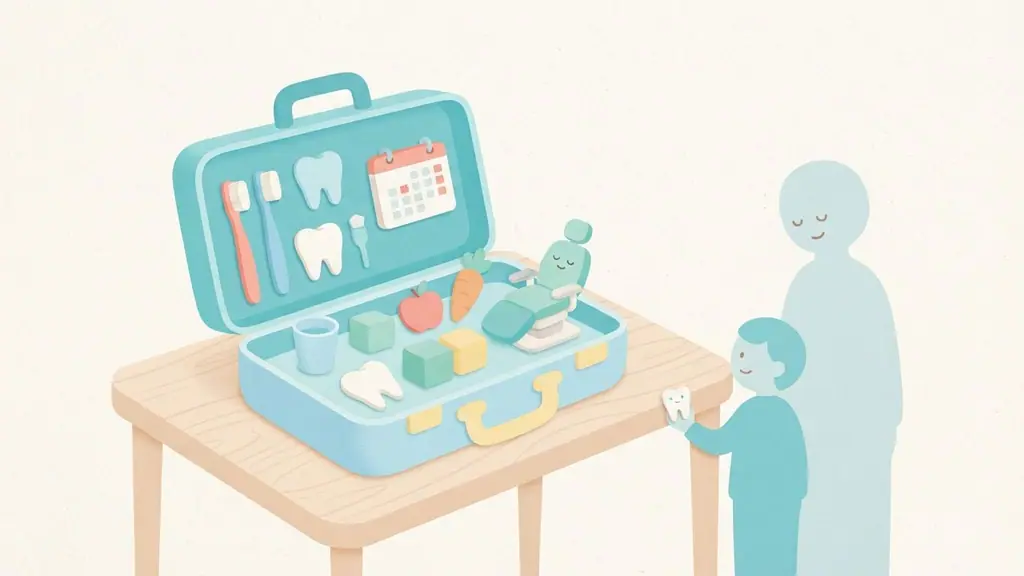
Our printable first dental visit checklist helps you organize what to bring and ask.
Questions worth asking
- How much toothpaste should we use, and what fluoride strength?
- Is our tap water fluoridated, and does my child need anything extra?
- Is my child at low, moderate or high risk of decay? What would lower it?
- How often should we come back?
- What should we do in a dental emergency, and who do we call out of hours?
- Are the dummy, bottle or thumb-sucking habits affecting the teeth?
Who to see
Many general dentists see babies and young children. Pediatric dentists (called paediatric dentists in the UK) have extra training in children's dentistry and in caring for children with additional needs. In some countries, pediatricians, family doctors or nurses also check teeth and apply fluoride varnish during routine child health visits; the CDC encourages asking about varnish from the first tooth.
If your child has sensory sensitivities or is autistic, mention it when booking. Many practices can offer a quieter time, a preparatory visit or other adjustments; see oral care for autistic children.
What does it cost?
Arrangements vary by country, so check locally:
- UK: NHS dental care is free for children under 18. If you're struggling to find a practice taking on children, your local NHS services or NHS 111 can point you in the right direction.
- US: Medicaid and the Children's Health Insurance Program (CHIP) include dental coverage for eligible children, and many private plans cover preventive visits for children. Community health centers and dental schools may offer lower-cost care.
- Elsewhere: Many countries have public programs for children's dental care; ask your pediatrician, family doctor or health visitor.
If cost is a worry, don't skip the visit: ask the practice about fees up front, as a preventive checkup is usually far less expensive than treating decay later.
After the first visit
- Follow-up visits are commonly every six months, but the AAPD recommends tailoring the interval to each child's risk, so your dentist may suggest more or less often. The NHS similarly advises regular check-ups as often as the dentist recommends.
- Keep up the home routine: brushing twice a day with fluoride toothpaste (a smear under three, a pea-sized amount from three to six), and supervising until around age seven or eight. Our oral hygiene by age tool summarizes each stage.
When to see a professional sooner
Don't wait for a routine appointment if you notice:
- white, yellow or brown spots on the teeth, or a visible hole;
- pain, swelling of the gum or face, or a pimple-like bump on the gum (facial swelling with fever needs same-day care);
- an injury to the mouth or teeth (see dental emergencies in children).
In a nutshell
Book the first dental visit by the first birthday or within six months of the first tooth. Expect a short, gentle check, practical advice and possibly fluoride varnish. Prepare your child with simple, positive words, and come with your questions. For more, visit our dental visits topic page.
Sources and further reading
- Periodicity of Examination, Preventive Dental Services, Anticipatory Guidance/Counseling, and Oral Treatment for Infants, Children, and Adolescents, American Academy of Pediatric Dentistry
- Perinatal and Infant Oral Health Care (Best Practices), American Academy of Pediatric Dentistry
- Babies and Kids, American Dental Association (MouthHealthy)
- Taking care of children's teeth, NHS
- Oral Health Tips for Children, Centers for Disease Control and Prevention