Toothbrushing With Sensory Sensitivities
Practical, respectful ways to make toothbrushing easier for children sensitive to touch, taste, sound or texture, from setting and tools to pacing.

For some children, toothbrushing is not just a boring chore: it is genuinely uncomfortable. The buzz of bristles on the gums, the foam, a strong mint taste, the sound of the tap, a parent leaning in close. Each of these can feel intense to a child whose nervous system processes sensory input strongly. Resistance in that case isn't defiance; it is a reasonable response to discomfort.
The good news is that brushing can usually be made more bearable by changing the how rather than giving up on the what. This guide focuses on practical adjustments: the environment, the tools, the toothpaste, the pacing and the language you use. Not every idea will suit every child. Think of it as a menu to try, one change at a time.
Understanding what your child is reacting to
Sensory sensitivities show up in different ways. Watching closely for a few days can tell you a lot. Notice whether your child seems bothered by:
| Possible trigger | What you might notice | Ideas to try |
|---|---|---|
| Touch and pressure on teeth, gums or lips | Pulling away as soon as the brush touches, especially the front gums | Extra-soft bristles, slower strokes, firm but gentle pressure rather than light tickling |
| Taste | Gagging or spitting immediately, refusing once paste is on the brush | Mild-flavored or unflavored fluoride toothpaste |
| Texture and foam | Distress as foam builds; drooling discomfort | Low-foam toothpaste, a smaller amount within guidelines, a cloth to wipe the chin |
| Sound and vibration | Covering ears, flinching at an electric brush or running tap | Manual brush, tap off, quiet room |
| Temperature | Disliking cold water on the brush | Room-temperature water |
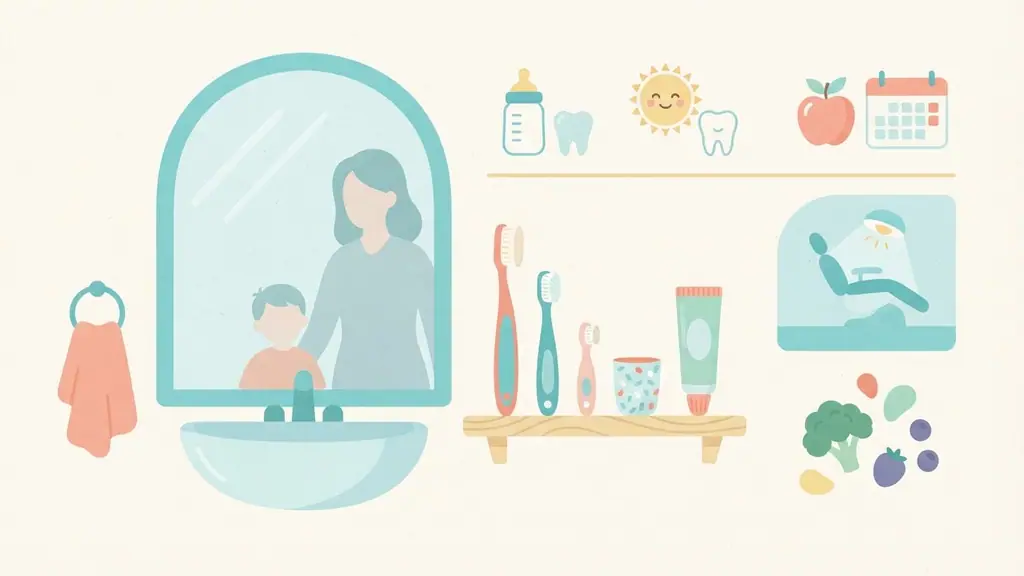
| Position and closeness | Squirming when you lean over them | Brushing side by side in a mirror, or with your child sitting on your lap facing away |
| Visual and space | Overwhelm in a bright, echoing bathroom | Dimmer light, brushing somewhere else (a sofa, the bedroom) |
Many children have a mix of these. Some children also seek strong input: they may chew the brush hard or prefer a firm, vigorous sensation. That's useful information too.
Setting the scene
Small environmental changes can lower overall stress before the brush even appears:
- Same time, same place, same order. Predictability lets your child anticipate what comes next.
- Choose a calm moment. If bedtime is already overloaded, brushing right after dinner (and avoiding food and drinks other than water afterward) may go better.
- Reduce competing input: fewer people around, lights lowered, tap off, no extra noise.
- Offer a comfortable position. Lying down with their head in your lap gives many children a sense of security and gives you a clear view.
- Use a visual schedule showing the steps (for example: sit, toothpaste, top teeth, bottom teeth, spit, done). A printable brushing tracker can help with the routine.
Tools that can help
- Brush: extra-soft bristles and a small head. The ADA recommends soft bristles for everyone. Some children prefer a silicone-bristled brush or a three-sided brush that covers more surfaces at once; others tolerate an electric brush better because of its steady, predictable movement. Let your child feel different options in their hands first.
- Toothpaste: keep using fluoride toothpaste, since it's the main protection against decay. Experiment with mild, unflavored or low-foam options. Amount: a smear (grain of rice) under 3, a pea-sized amount from 3 to 6. See fluoride toothpaste: how much to use at each age.
- A timer or song with a clear end point. Knowing exactly when it will finish can make a huge difference. Try our toothbrushing timer.
- A small towel or cloth for wiping foam or drool.
Spit, don't rinse. If your child dislikes the lingering taste, a small sip of water afterward is better than skipping brushing. But where possible, encourage spitting out the excess without rinsing, so the fluoride keeps working.
Gradual steps toward a full brush
If brushing currently isn't possible at all, build up in small, manageable stages. Move to the next step only when the current one feels comfortable, and go back a step without fuss if needed.
- Touch around the face. Play with gentle touch on cheeks and lips, perhaps during a song.
- Introduce the brush outside the mouth. Let your child hold it, look at it, touch it to their hand or arm.
- Brush lips and front teeth briefly, without toothpaste. Count aloud to five, then stop.
- Add a few more teeth, still counting so your child knows when it ends.
- Introduce a tiny amount of fluoride toothpaste.
- Work toward all surfaces over about two minutes, possibly split into two shorter sessions in the beginning.
Give your child as much control as is safe: they could choose the brush color, hold the timer, do the first few strokes or say "stop" with an agreed signal. Respecting that signal builds trust, and trust makes the next session easier.
Language and approach
- Explain before acting. "Now I'm going to brush the top teeth. I'll count to ten."
- Keep the tone calm and matter-of-fact. Brushing is just part of the day.
- Acknowledge discomfort. "I know the foam feels funny. We're almost done."
- Praise effort, not perfection.
- Avoid restraint and threats. Forcing brushing can increase fear and make future sessions harder. If you're struggling, that's a cue to get professional support, not to push harder.
A 2025 scoping review of research on caregivers' experiences found that sensory, behavioral and practical difficulties often make it hard for families of autistic children to follow standard brushing advice. If this sounds familiar, you're not alone, and adjusting the routine to fit your child is a sensible response, not a failure. For autism-specific strategies, see oral care for autistic children.
Supporting the rest of the routine
When brushing is hard, other habits matter even more:
- Keep sugary foods and drinks to mealtimes; offer water between meals.
- Avoid bottles of milk or juice in bed.
- Keep regular dental check-ups and ask about fluoride varnish.
When to seek professional support
Talk to your child's dentist, pediatric dentist, pediatrician or an occupational therapist if:
- Brushing has become impossible or consistently ends in distress.
- You see signs of decay: white chalky patches, brown spots or holes, or your child complains of tooth pain.
- Gums bleed easily or look swollen.
- Your child gags or vomits frequently during brushing.
- Sensory reactions are affecting eating, sleep or daily life more widely.
The American Academy of Pediatric Dentistry encourages a "dental home" that coordinates care and uses sensory adaptations and behavior guidance for children with special health care needs. Dental teams experienced with sensory differences can suggest tailored strategies and plan visits around your child's needs. Many families find it helpful to visit early, before any problems, so the first experiences at the dentist are positive. Our guide to dental anxiety in children has ideas for preparing.
A quick plan to start this week
- Observe for three days: what seems to bother your child most?
- Change one thing (brush, toothpaste, position, place or sound).
- Use a clear countdown or timer so your child knows when it ends.
- Keep fluoride toothpaste in the routine, in the right amount.
- Celebrate small wins and build up gradually.
Sources and further reading
- Management of Dental Patients with Special Health Care Needs (Best Practices), American Academy of Pediatric Dentistry
- A scoping review on parental/caregiver challenges in maintaining oral hygiene among children with autism spectrum disorder, International Journal of Paediatric Dentistry
- Toothbrushes, American Dental Association (MouthHealthy)
- Taking care of children's teeth, NHS
- Guidelines on the use of fluoride for caries prevention in children: an updated EAPD policy document, European Archives of Paediatric Dentistry