When to Start Brushing Your Child's Teeth
Brushing starts with the first tooth. Which toothbrush to use, how much fluoride toothpaste by age and country, and how to make it a calm habit from the start.
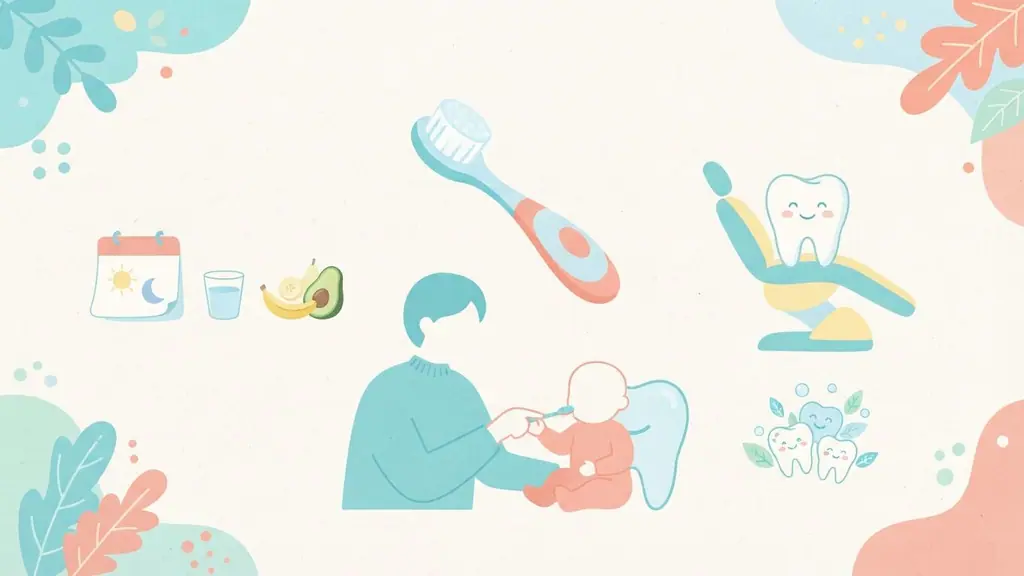
The answer is clear, and the main pediatric dental and medical organizations agree on it: start brushing as soon as the first tooth appears, usually at around 6 months. There's no need to wait until all the teeth are in, until the first birthday, or until your child "knows how" to brush.
From that first tooth, the advice is to brush twice a day, in the morning and above all before bed, with a soft baby toothbrush and a very small amount of fluoride toothpaste. Cleaning one tiny tooth can feel like overkill, but plaque starts building up from day one, and decay can appear earlier than many parents expect.
Starting early has a hidden bonus, too: your baby gets used to the toothbrush while it's still new and interesting, not something imposed on a determined toddler.
Before the first tooth: the gums
Before any teeth come through, you don't need toothpaste. Many families wipe the gums with a damp gauze pad or clean cloth once a day, after the bath for example, and the ADA and AAP suggest doing so after feeds. It helps your baby get used to having their mouth touched and creates a little routine. We explain how in how to clean your baby's gums.
With the first tooth: what you need
| Item | What to look for |
|---|---|
| Toothbrush | A baby toothbrush with a small head, soft bristles and a handle you can hold firmly |
| Early alternatives | A damp gauze pad or silicone finger brush if your baby accepts it better; move to a toothbrush as soon as you can |
| Toothpaste | Fluoride toothpaste; strength and amount depend on age and country (see below) |
| Timing | Twice a day; the bedtime brush matters most |
A toothbrush cleans better than gauze over time, especially once the molars arrive.
How much fluoride toothpaste? It depends on age and country
This is where most questions come up, because recommendations aren't identical everywhere. Where they agree is that under age 3 the amount should be tiny (a smear or grain of rice on the bristles), and from age 3 it moves up to a pea-sized amount, although European guidance makes the switch a little earlier.
| Guidance | First tooth to age 3 | Ages 3 to 6 |
|---|---|---|
| AAPD / ADA (US) | A smear or grain-of-rice amount of fluoride toothpaste | A pea-sized amount |
| NHS (UK) | A smear of toothpaste with at least 1,000 ppm fluoride | A pea-sized amount, 1,000–1,500 ppm |
| EAPD (Europe) | 1,000 ppm in a grain-of-rice amount up to age 2, then pea-sized | Pea-sized amount, 1,000 ppm; 1,450 ppm from age 6 |
The ppm (parts per million) figure shows the fluoride concentration and is printed on the tube. The American Dental Association (ADA) estimates that a rice-sized smear of 1,000 ppm toothpaste contains about 0.1 mg of fluoride, which keeps the amount a young child swallows well below levels of concern. If you're unsure which to choose, or your child is at higher risk of decay, a dentist can advise. For the full picture, see fluoride toothpaste by age.
A tip to avoid overdoing it: put the toothpaste on the brush yourself, keep the tube out of your child's reach, and press very lightly, just enough to color the bristles.
How to brush in the early months
- Find a comfortable, safe position. With your baby lying on your lap or a changing mat with their head supported, or sitting on your lap facing away from you, you can see into the mouth easily.
- Lift the lip gently to see the tooth and gum.
- Use short, gentle strokes on every surface of the tooth and the gum around it.
- No need to rinse with water. If your baby spits, great; if not, wipe away extra foam with a gauze pad. The NHS advises spitting out but not rinsing, so the fluoride keeps working.
- Finish on a happy note: a song, a cuddle, an "all done!".
As more teeth arrive, brushing gradually lengthens to about two minutes. Our toothbrushing timer can help once your child is a little older.
If your baby doesn't like it
It's common for babies to protest, turn away or chomp on the brush at first. Some ideas:
- Choose a moment when your baby is calm, not exhausted or hungry.
- Let them hold and explore a second toothbrush while you brush with yours.
- Sing the same song every time so they know how long it lasts.
- If teething has made the gums sore, be gentler, but try not to skip the bedtime brush.
- If it's impossible one day, don't turn it into a battle: try again later or the next day.
At this age the adult does the actual cleaning; letting your child "play" with the brush first and then finishing yourself works well. You'll find more ideas in how to make toothbrushing fun.
Habits that go with brushing
The toothbrush is only part of prevention. From the first teeth, it also helps to:
- Avoid putting your baby to bed with a bottle of milk, juice or other sweet drinks.
- Never sweeten a pacifier (dummy) with honey or sugar.
- Limit free sugars, as the World Health Organization advises. The AAP recommends no juice at all before 12 months.
- Book the first dental visit when the first tooth appears and by the first birthday at the latest (AAPD, ADA, AAP); the NHS suggests going when the first teeth come through.
When to see a professional
Talk to a dentist if:
- You see chalky white patches near the gums, or brown spots on the teeth
- The gums often bleed during brushing even though you're gentle
- You're unsure which toothpaste is right or how likely your child is to get decay
- Your child has had their first birthday and hasn't yet had a dental check-up
Quick recap
- Start brushing with the first tooth, twice a day, especially before bed.
- Use a soft baby toothbrush; gauze or a finger brush can help at first.
- Under 3: fluoride toothpaste in a smear or grain-of-rice amount; from 3 to 6, a pea-sized amount. Recommended strength varies by country.
- At this age, the adult does the brushing.
- Pair brushing with good feeding habits and a first dental visit by age 1.
Sources and further reading
- Taking care of children's teeth, NHS
- Baby Teeth, American Dental Association (MouthHealthy)
- Policy on the Use of Fluoride, American Academy of Pediatric Dentistry
- How to Prevent Tooth Decay in Your Baby, American Academy of Pediatrics (HealthyChildren.org)
- Guidelines on the use of fluoride for caries prevention in children: an updated EAPD policy document, European Academy of Paediatric Dentistry (Eur Arch Paediatr Dent)