Oral Health Guide for Ages 0 to 3
A stage-by-stage guide to oral health from birth to age 3: gum care, first teeth, fluoride toothpaste, feeding, teething and your child's first dental visit.
The first three years are when the habits that protect your child's teeth for life are built. During this time most children go from a gummy smile to a full set of 20 baby teeth, and every one of them needs cleaning, protecting from sugar and checking by a dentist.
It sounds like a lot, but the essentials are simple: clean the mouth daily, brush with a smear of fluoride toothpaste from the first tooth, keep sugary drinks and snacks to a minimum, avoid bottles in bed, and see a dentist by the first birthday. This guide breaks it down by stage so you know what matters when.
The essentials at a glance
| Age | Main focus | Key habits |
|---|---|---|
| 0–6 months | Gums and feeding | Wipe gums gently once a day; feed responsively; no sweet coatings on pacifiers |
| 6–12 months | First teeth | Brush twice a day with a smear of fluoride toothpaste; introduce a cup; first dental visit |
| 12–24 months | More teeth, new foods | Move away from bottles; limit free sugars; keep brushing twice daily |
| 24–36 months | Full set of baby teeth | Child "helps" brush; adult finishes; regular check-ups; wind down pacifier use |
0 to 6 months: before the teeth
Even without teeth, a baby's mouth benefits from gentle care:
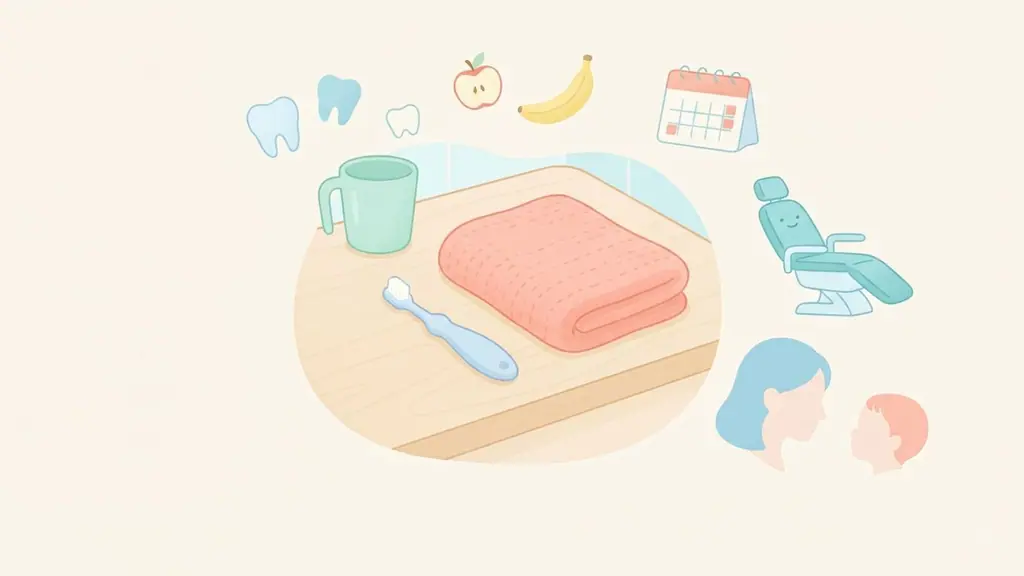
- Wipe the gums once a day with a clean, damp cloth or gauze wrapped around your finger, especially after the last feed. It removes milk residue and gets your baby used to having their mouth cleaned.
- Pacifiers: if you use one, the American Academy of Pediatrics (AAP) suggests waiting until breastfeeding is well established (about 3–4 weeks) for breastfed babies, and offering it at sleep times. Never dip it in honey, sugar or juice.
- Your own mouth matters too. Looking after your own teeth and avoiding sharing spoons when possible are simple, sensible habits.
6 to 12 months: the first teeth
Most babies get their first tooth somewhere around 6 months, usually a lower front tooth, but anywhere from a few months earlier to after the first birthday can be normal. Our baby teeth eruption timeline shows the typical order.
Start brushing straight away
As soon as the first tooth appears:
- Use a small, soft baby toothbrush.
- Add a smear of fluoride toothpaste, about the size of a grain of rice.
- Brush twice a day, including last thing before bed.
- No need to rinse; just wipe away excess foam.
US guidance (AAPD, ADA, AAP) recommends a smear until age 3. The NHS recommends a smear of toothpaste with at least 1,000 ppm fluoride, and the European Academy of Paediatric Dentistry (EAPD) recommends 1,000 ppm in a grain-of-rice amount up to age 2, then a pea-sized amount. For a full comparison, see fluoride toothpaste: how much to use at each age.
Teething
Teething can make babies drool, chew and feel unsettled. Safe comfort options include a clean, chilled (not frozen) teething ring or gently rubbing the gums with a clean finger. Avoid amber teething necklaces and numbing gels containing benzocaine or lidocaine. Find out why in amber necklaces and teething gels.
First dental visit
The American Academy of Pediatric Dentistry (AAPD), the American Dental Association (ADA) and the AAP recommend a first dental visit by the first birthday, or within six months of the first tooth. The NHS suggests going when the first milk teeth appear and before 12 months. The visit is usually short and friendly: a look at the teeth and gums, a chat about brushing, feeding and fluoride, and time for your questions. See your child's first dental visit.
Feeding and cups
Around 6 months, as solid foods begin, it's a good time to introduce a cup for water. Water and milk are the most tooth-friendly drinks.
12 to 24 months: busy toddlers
More teeth arrive, including the first molars, and toddlers start eating family foods.
- Bottles: aim to move from bottles to cups around the first birthday. Avoid putting your child to bed with a bottle of milk, formula or juice, which can lead to early tooth decay (often called baby bottle tooth decay).
- Sugar: the World Health Organization (WHO) recommends that both adults and children keep free sugars (added sugars plus those in honey, syrups and fruit juices) below 10% of daily energy, ideally below 5%. For toddlers, the simplest approach is to avoid sweetened drinks and keep sweet foods occasional and with meals.
- Snacking: frequent grazing gives teeth little rest. Try to offer meals and planned snacks rather than continuous nibbling.
- Brushing: keep going twice a day. Many toddlers protest; try singing, letting them hold a second brush, or brushing in front of a mirror.
Brushing positions that work: sit on the floor with your toddler lying with their head in your lap, or stand behind them in front of a mirror and cup their chin. Both give you a clear view and gentle control.
24 to 36 months: a full set of baby teeth
By around age 3, most children have all 20 baby teeth, including the second molars at the back.
- Toothpaste: US guidance keeps a smear until age 3, then a pea-sized amount. UK and EAPD guidance may move to a pea-sized amount from 2–3 years.
- Independence: let your child have a turn, then finish the job yourself. Adults should brush or supervise until about 7–8 years.
- Spitting: start practising spitting out (without rinsing) so the fluoride stays on the teeth.
- Pacifiers and thumb sucking: the AAPD encourages stopping non-nutritive sucking habits by age 3. See pacifiers and teeth.
- Regular check-ups: continue as advised by your child's dentist.
Signs to check with a dentist
Contact your child's dentist if you notice:
- White chalky patches along the gumline, especially on the upper front teeth (an early sign of decay).
- Brown or black spots or holes in the teeth.
- Swollen, bleeding gums that don't improve with gentle brushing.
- A knock or injury to the teeth. A knocked-out baby tooth should not be put back in; contact a dentist promptly.
- No teeth by about 18 months, or concerns about the pattern of eruption.
Seek urgent care for facial swelling with fever, uncontrolled bleeding or a head injury with loss of consciousness.
Your 0–3 checklist
- Wipe gums daily from birth.
- Brush twice a day from the first tooth with a smear of fluoride toothpaste.
- See a dentist by the first birthday.
- Water and milk are the best drinks; no bottles in bed.
- Keep free sugars low; sweet foods only occasionally, with meals.
- No honey, sugar or sweet coatings on pacifiers.
- Avoid amber necklaces and numbing teething gels.
- Work toward stopping pacifier use by about age 3.
For a personalized checklist by age, try our oral hygiene by age guide.
Sources and further reading
- Oral Health Policies and Recommendations, American Academy of Pediatric Dentistry
- Toothpastes (Oral Health Topics), American Dental Association
- Taking care of children's teeth, NHS
- WHO calls on countries to reduce sugars intake among adults and children, World Health Organization
- Guidelines on the use of fluoride for caries prevention in children: an updated EAPD policy document, European Archives of Paediatric Dentistry
- Pacifiers and Thumb Sucking, American Academy of Pediatrics (HealthyChildren.org)