Choosing a Toothbrush for Your Child
What to look for in a child's toothbrush at each age: soft bristles, head size, handle shape, when to replace it, and how to store it hygienically at home.
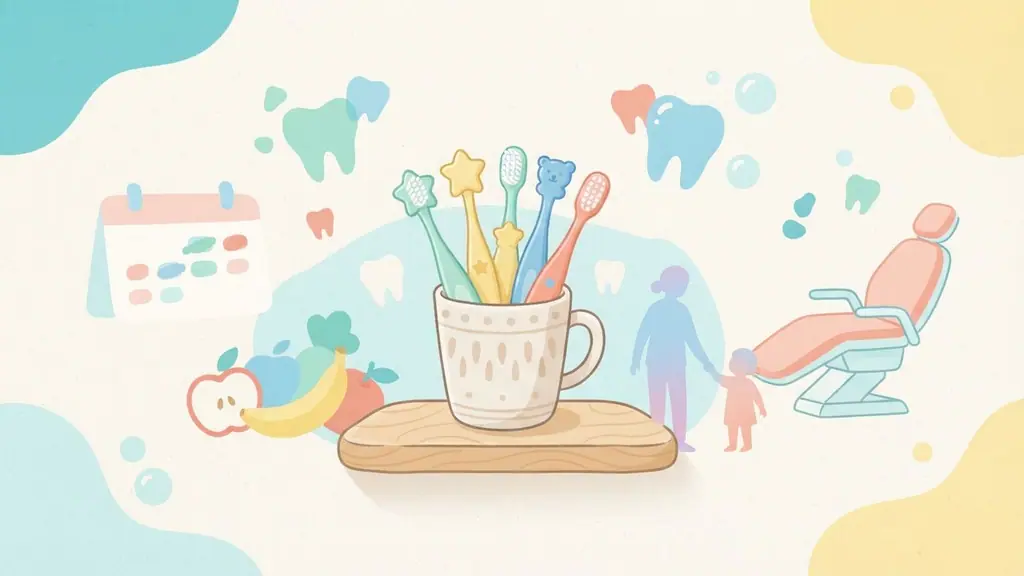
The best toothbrush for a young child is small, soft and comfortable for the adult doing most of the brushing. There is no need for anything elaborate: a brush that reaches every tooth without hurting the gums, used twice a day with the right amount of fluoride toothpaste, does the job.
This guide walks through what actually matters at each stage, from a baby's first tooth to a school-age child who wants to brush independently, plus the small habits (replacing, storing, not sharing) that keep a toothbrush working well.
The three features that matter most
1. Soft bristles
Every major guideline points to soft bristles. The American Dental Association (ADA) advises soft-bristled brushes because firmer bristles can irritate gums and wear enamel, and the European Academy of Paediatric Dentistry (EAPD) recommends brushing children's teeth with a soft manual or powered toothbrush. Children's gums are delicate, and it is the gentle, thorough sweeping plus fluoride toothpaste that protects teeth, not scrubbing force.
2. A small head
The head should be small enough to reach the back teeth and move comfortably inside your child's mouth. The NHS recommends a small, soft toothbrush suited to your child's age. If you find it hard to angle the brush behind the back molars, the head is probably too big.
3. A handle that suits the person brushing
For babies and toddlers, the adult does the brushing, so the handle should be comfortable for your grip. Once your child starts to take part, a thicker, non-slip handle is easier for small hands to hold. Some families keep two brushes: one the child practices with, and one the adult uses to finish the job.
Toothbrushes by age
| Stage | What to look for | Who brushes |
|---|---|---|
| Before teeth | No brush needed; a clean, damp cloth or gauze on your finger | Adult |
| First teeth (about 6–12 months) | Infant brush with a very small head and extra-soft bristles; a longer handle helps you reach | Adult |
| Toddlers (1–3 years) | Small head, soft bristles, chunky handle the child can also hold | Adult, with the child "helping" |
| Preschoolers (3–6 years) | Small to medium child head, soft bristles, grippy handle | Child practices, adult finishes |
| School age (6+ years) | Child or junior brush with soft bristles; move up in size as the mouth grows | Child brushes, adult supervises until about 7–8 |
Before teeth come in, wiping the gums gently once a day helps your baby get used to having their mouth cleaned. Our guide on how to clean your baby's gums explains how. Once that first tooth appears, it is time for a brush and a smear of fluoride toothpaste; see when to start brushing your child's teeth.
Silicone finger brushes can be a gentle way to help a baby get used to something in the mouth. Once teeth arrive, guidelines from the NHS, ADA and EAPD all describe brushing with a small, soft toothbrush, so that is the usual next step.
Manual or electric?
Both work. The ADA states that manual and powered brushes can both clean teeth effectively when used well, and the EAPD lists either as acceptable for children. A powered brush can help some children who find manual brushing tiring, or adults who find it hard to clean a wriggly child's teeth thoroughly. Others find the noise or vibration unpleasant at first.
If you're weighing up the options, our article on electric toothbrushes for children covers the pros, cons and timing in more detail.
Features you can skip (or take or leave)
- Characters and colors. Harmless, and sometimes motivating. A child who chooses their own brush may be keener to use it. Just make sure the basics (soft, small) are right.
- Built-in timers or light-up handles. Can be fun; a simple timer or song does the same job. Try our toothbrushing timer.
- Rubber "tongue cleaners" on the back of the head. Not necessary for young children.
- Angled or crisscross bristles. Fine if your child likes them, but there's no need to pay extra.
Look for a quality mark if one is used where you live. In the US, the ADA Seal of Acceptance is awarded to toothbrushes that have been independently evaluated for bristle security, handle strength and cleaning effectiveness.
When to replace a toothbrush
The ADA recommends replacing a toothbrush every three to four months, or sooner if the bristles look frayed. Children's brushes often wear out faster because they get chewed. Splayed bristles do not clean as well, so a flattened brush is a sign it's time.
It is also sensible to replace the brush after your child has been unwell, especially if it has been dropped somewhere unhygienic, though this is a matter of common sense rather than a specific guideline.
A simple way to remember: change brushes with the seasons, or mark the date on a calendar. A printable brushing tracker can double as a replacement reminder.
Storing and caring for toothbrushes
Following ADA advice:
- Rinse the brush under the tap after brushing to remove toothpaste and debris.
- Store it upright and let it air-dry.
- Keep brushes apart so the heads don't touch each other.
- Avoid closed containers for everyday storage; damp, enclosed spaces encourage germs. Travel caps are fine for short trips, as long as the brush dries afterward.
- Don't share toothbrushes, even between siblings.
Safety tip from the NHS: don't let children walk or run around with a toothbrush in their mouth. Brushing while sitting or standing still is safer.
Making the brush part of a good routine
The right brush is only as good as the routine around it. Twice a day, including last thing at night, with an age-appropriate amount of fluoride toothpaste, is the foundation. Read how much fluoride toothpaste to use at each age for the details, and how to make toothbrushing fun if you're facing resistance.
When to ask a professional
Talk to your child's dentist or pediatric dentist if:
- Your child's gums bleed regularly when brushed, even with a soft brush.
- Brushing seems painful or your child strongly avoids having their mouth touched; sensory sensitivities can make brushing hard, and a dentist or occupational therapist can suggest adaptations.
- Your child has a medical condition, disability or motor difficulty that makes a standard brush hard to use. Adapted handles and other aids exist.
- You're unsure whether your child is ready to brush more independently.
Checklist
- Soft bristles
- Small head that reaches the back teeth easily
- Handle that fits the person brushing
- Replaced every 3–4 months, or sooner if frayed
- Rinsed, stored upright, air-dried, never shared
- Used twice a day with fluoride toothpaste, with an adult helping until about 7–8 years
Sources and further reading
- Toothbrushes, American Dental Association (MouthHealthy)
- Taking care of children's teeth, NHS
- Guidelines on the use of fluoride for caries prevention in children: an updated EAPD policy document, European Archives of Paediatric Dentistry
- Oral Health Policies and Recommendations, American Academy of Pediatric Dentistry