When Do Babies Get Their First Teeth?
Most babies get a first tooth around 6 months, but before 4 months or after 12 can be normal too. See the tooth-by-tooth timeline, normal signs and when to ask.
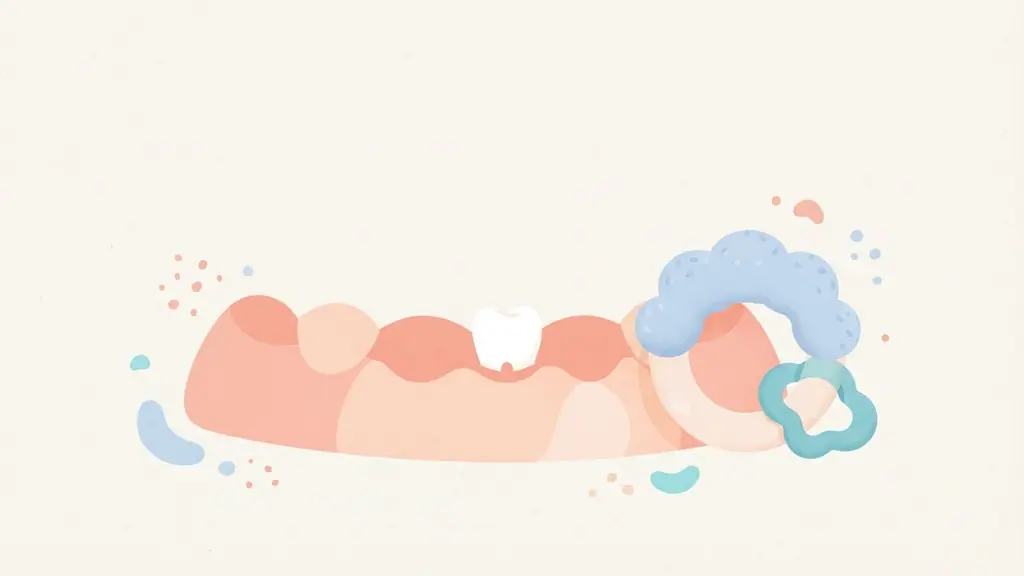
Most babies get their first tooth at around 6 months, and it's usually one of the lower front teeth (a lower central incisor). But "around" is the key word. The NHS notes that some healthy babies show a first tooth before 4 months, while others still have smooth gums after their first birthday. Both are usually normal.
All 20 baby teeth have generally come through by somewhere between age 2 and 3. Below you'll find a tooth-by-tooth timeline, the signs that are normal, safe ways to ease discomfort, and the small surprises (such as a bluish bump on the gum) that are worth asking about.
The timeline, tooth by tooth
These ages come from the American Dental Association (ADA) eruption chart. They're ranges, not deadlines: most children are a little ahead of or behind the average, and that alone isn't a sign of a problem.
| Baby tooth | Upper jaw | Lower jaw |
|---|---|---|
| Central incisor | 8–12 months | 6–10 months |
| Lateral incisor | 9–13 months | 10–16 months |
| First molar | 13–19 months | 14–18 months |
| Canine (eye tooth) | 16–22 months | 17–23 months |
| Second molar | 25–33 months | 23–31 months |
Two details are worth noticing. First, lower teeth usually arrive before their upper partners. Second, the first molars usually come in before the canines, so for a few months you'll see a gap between the front teeth and the back teeth. That's completely normal. We explain the sequence in more depth in the order baby teeth come in, and you can follow your child's progress with our baby teeth eruption timeline.
The NHS sums up the pace simply: front teeth at about 6 months, the teeth beside them at about 8 months, first molars at about 12 months, canines at about 18 months and second molars at about 24 months.
Very early or quite late?
A few babies are born with a tooth (a natal tooth) or get one in the first month (a neonatal tooth). These are worth showing to your pediatrician or a pediatric dentist, especially if the tooth is loose or makes feeding uncomfortable. At the other end, some children don't get their first tooth until after their first birthday. Timing often runs in families. Because a first dental visit is recommended by age 1 anyway, that's a natural moment to mention it.
Which signs are normal (and which aren't)
Many babies show no discomfort at all: one day you hear a little click on the spoon, and there it is. Others, in the days before a tooth appears, may:
- Drool more and want to chew everything
- Have a swollen, slightly red patch of gum
- Be fussier or sleep less well for a few nights
- Rub an ear or have a flushed cheek
The NHS says a slightly raised temperature (below 38°C / 100.4°F) can happen. The American Academy of Pediatrics (AAP) says teething doesn't cause fever. What neither supports is blaming teething for a real fever, diarrhea, vomiting or a baby who seems very unwell. If those appear, talk to your pediatrician or GP: the likeliest explanation is something else, such as an infection, that happens to coincide with a new tooth.
Important: Don't put a high temperature or a listless baby down to teeth. Teething is a normal process; illness isn't.
Easing discomfort safely
Teething is a natural stage, and simple physical measures are enough for most babies:
- Gentle pressure: rub the gum with a clean finger.
- Cool, not frozen: offer a firm teether chilled in the fridge. Frozen objects can hurt the gums.
- Safe objects only: avoid hard foods that can break into pieces, such as raw carrot, because of the choking risk.
- Wipe away drool from the chin often to prevent a rash.
- Pain relief only if needed: if discomfort is really disturbing your baby, especially at night, ask your pediatrician, GP or pharmacist about an infant pain reliever at the right dose for their weight and age.
And what to avoid:
- Gels containing benzocaine or lidocaine. The FDA says they offer little or no benefit and carry serious risks; benzocaine shouldn't be used for teething in children under 2 because of the risk of methemoglobinemia.
- Amber necklaces and other teething jewelry, which have no proven benefit and have been linked to strangulation and choking. Read why in amber necklaces and teething gels.
- Dipping a pacifier (dummy) in honey or sugar. It encourages decay, and honey shouldn't be given before 12 months.
For more on soothing sore gums, see understanding teething.
Small surprises along the way
A bluish bump on the gum
Sometimes, just before a tooth comes through (more often a molar), a small bluish or purplish bubble appears on the gum. It's called an eruption cyst or eruption hematoma, and it usually disappears on its own once the tooth breaks through. Mention it to a dentist if it grows, seems very painful or looks infected.
Two rows of teeth
Much later, at around 6 to 7 years, it's common for a lower adult front tooth to come in behind a baby tooth that hasn't fallen out yet, sometimes called "shark teeth". Often the baby tooth loosens and falls out on its own within a few weeks; if not, a dentist can advise.
From baby teeth to adult teeth
Baby teeth start to fall out at around age 6, and the process continues until about 12. According to the ADA chart, baby central incisors usually come out at 6 to 7, lateral incisors at 7 to 8, and canines and molars between 9 and 12. Meanwhile, the first permanent molars come in behind the last baby molars without any tooth falling out, which is why they often go unnoticed.
Caring for the first tooth
As soon as the first tooth appears, start brushing twice a day with a soft baby toothbrush and a tiny amount of fluoride toothpaste. Recommendations vary by country:
| Guidance | Under 3 years | 3 to 6 years |
|---|---|---|
| AAPD / ADA (US) | A smear, about the size of a grain of rice | A pea-sized amount |
| NHS (UK) | A smear, at least 1,000 ppm fluoride | A pea-sized amount, 1,000–1,500 ppm |
| EAPD (Europe) | Grain-of-rice amount of 1,000 ppm up to age 2 | Pea-sized amount of 1,000 ppm from 2; 1,450 ppm from 6 |
The first dental check-up is recommended when the first tooth appears and no later than the first birthday (AAPD, ADA and AAP); the NHS suggests going when the first teeth come through and before 12 months. Our guide on when to start brushing your child's teeth walks you through the first weeks.
When to see a professional
Contact your pediatrician, GP or a pediatric dentist if:
- Your baby has a fever, diarrhea or vomiting, or seems unwell (don't put it down to teeth)
- No teeth have come through by the first birthday, or the order looks very different from usual
- A bump on the gum grows, bleeds a lot or comes with swelling
- You see white, brown or broken areas on newly arrived teeth
- An adult tooth comes in behind a baby tooth that still hasn't loosened after a few weeks
In short: first tooth at around 6 months (with wide variation), all baby teeth by about age 2 to 3, relief with cool and gentle pressure, no numbing gels or teething jewelry, and fluoride toothpaste from the very first tooth.
Sources and further reading
- Eruption Charts, American Dental Association (MouthHealthy)
- Baby teething symptoms, NHS
- Teething Pain: How to Help Your Baby, American Academy of Pediatrics (HealthyChildren.org)
- Safely Soothing Teething Pain in Infants and Children, U.S. Food and Drug Administration
- Taking care of children's teeth, NHS